
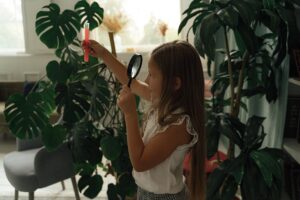
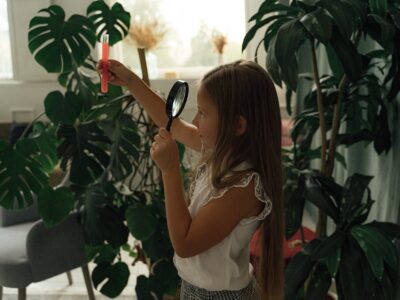
Children are born curious — but the world slowly teaches them to hurry, comply, and compete. To keep their love of learning alive, parents must design an environment of exploration, not evaluation. That doesn’t mean turning your living room into a science lab (though that’d be fun). It means embedding wonder into daily life — how you talk, what you praise, and where you allow failure to live.
The Invisible Tug Between Curiosity and Control
Every child starts life as a scientist. They poke, prod, mix, build, and break. Around early school years, external rewards begin replacing that natural reward system. Stickers replace satisfaction. Grades replace growth.
Parents, without realizing it, often double down on control — “Finish your homework first” or “You need to be the best.” It works short-term, but long-term it suppresses intrinsic motivation. The goal is not to make them learn. The goal is to help them want to keep learning.
Checklist: Building a Curiosity-Friendly Home
Here’s a quick diagnostic you can run tonight:
| Habit | Signal It Encourages | Try This Instead |
| “Because I said so.” | Obedience over thinking | “What do you think might happen if we try it your way?” |
| Rewarding only A+ | Performance anxiety | Celebrate persistence, not perfection |
| Over-scheduling | Burnout | Leave white space for boredom — it breeds creativity |
| Solving every problem | Dependence | Ask, “What could you try next?” |
| Comparing siblings | Competition | Let each child set their own benchmark |
The Parent’s Toolkit: 7 Small Shifts That Change Everything
- Turn questions into quests.
When your child asks “Why is the sky blue?” say, “Let’s find out.” Curiosity thrives on participation. - Model fascination.
Let your kids catch you learning something new — a language, a recipe, or a skill. You teach curiosity by doing it yourself. - Build boredom tolerance.
Resist filling every gap with entertainment. Learning to self-direct starts with having space to be bored. - Mix failure with humor.
Laugh when experiments go sideways. Take a look at this resource on how to model resilience. - Praise the process.
Shift your language from “You’re so smart” to “You worked hard figuring that out.” Effort-based praise builds lifelong learners. - Create “learning zones” at home.
Keep simple materials — paper, magnifying glass, open-ended toys. Visibility drives us. - Tell origin stories.
Every subject becomes alive when kids learn where it began — how humans discovered fire, mapped stars, or wrote music.
A Parent’s How-To Plan (5 Steps for Reigniting Motivation)
- Observe: For one week, track what topics or play patterns naturally absorb your child.
- Align: Match resources to those patterns (e.g., space books for astronomy lovers).
- Invite: Ask open-ended questions starting with “What if…” or “How might…”
- Expand: Offer experiences — museums, workshops, or hands-on experiments.
- Reflect: End each week with one simple question: “What surprised you most this week?”
(Bonus tip: write their answers down — those reflections become a treasure map to their curiosity.)
Leading by Example: When Parents Go Back to School
Children imitate ambition. When they see a parent returning to school or starting a new degree, they witness learning as a lifelong act, not a childhood phase. If you’ve been thinking of expanding your own education, now might be the time — online programs make it possible to balance work, parenting, and study without losing your sanity. For example, you can check this out — earning a degree in psychology lets you explore how humans think, feel, and grow, while modeling the value of continuous learning for your kids.
The Psychology of Curiosity — How It Evolves Through Childhood
Curiosity isn’t static — it grows, morphs, and matures as children do. Here’s how it changes across ages, and how parents can nurture it at each stage:
- Ages 3–6: The Explorer Stage
Core drive: discovery through senses and movement.
Your role: offer variety — textures, sounds, colors, and natural experiences.
What works best: hands-on play, storybooks, nature walks, and simple “what happens if…” experiments. - Ages 7–10: The Builder Stage
Core drive: mastery and making sense of cause and effect.
Your role: encourage persistence; celebrate small wins and questions that lead to more questions.
What works best: projects, puzzles, beginner science kits, and creative challenges where results aren’t guaranteed. - Ages 11–14: The Identity Stage
Core drive: self-expression and belonging.
Your role: give them ownership — let them choose projects, topics, or hobbies that reflect their interests.
What works best: clubs, group activities, debates, and problem-solving games that blend collaboration and autonomy. - Ages 15–18: The Purpose Stage
Core drive: connecting learning to meaning and future goals.
Your role: model direction and curiosity yourself — talk about what you’re learning, failing at, and trying next.
What works best: mentorship opportunities, real-world challenges, volunteer work, and reflection-based activities.
Real-World Resource Highlight: “The Kid Should See This”
If you’re looking for a screen time option that still feeds curiosity, visit The Kid Should See This. It curates short, high-quality videos that spark awe — from space launches to musical instrument design — ideal for co-watching and conversation.
FAQ: Common Parent Questions About Learning Motivation
Q: My child used to love reading but doesn’t anymore. What should I do?
A: Don’t force reading time. Instead, reconnect with the why. Let them choose any topic — even comics or game manuals. Choice revives curiosity.
Q: How much screen time is too much?
A: Balance is better than bans. Link screen use to exploration — documentaries, creative apps, or coding games — instead of passive scrolling.
Q: What if my child hates school?
A: Separate school from learning. Show them how learning exists beyond grades — cooking, building, questioning — and reconnect it to joy.
A Final Reflection
Keeping the love of learning alive isn’t about creating genius. It’s about cultivating wonder.
Your child’s curiosity is a flame — not a light switch. It doesn’t need constant control, only consistent fuel. Read with them. Wonder with them. Learn beside them.
